Von Kariv nach Aalen mit Zwischenstopp am fem in Schwäbisch Gmünd
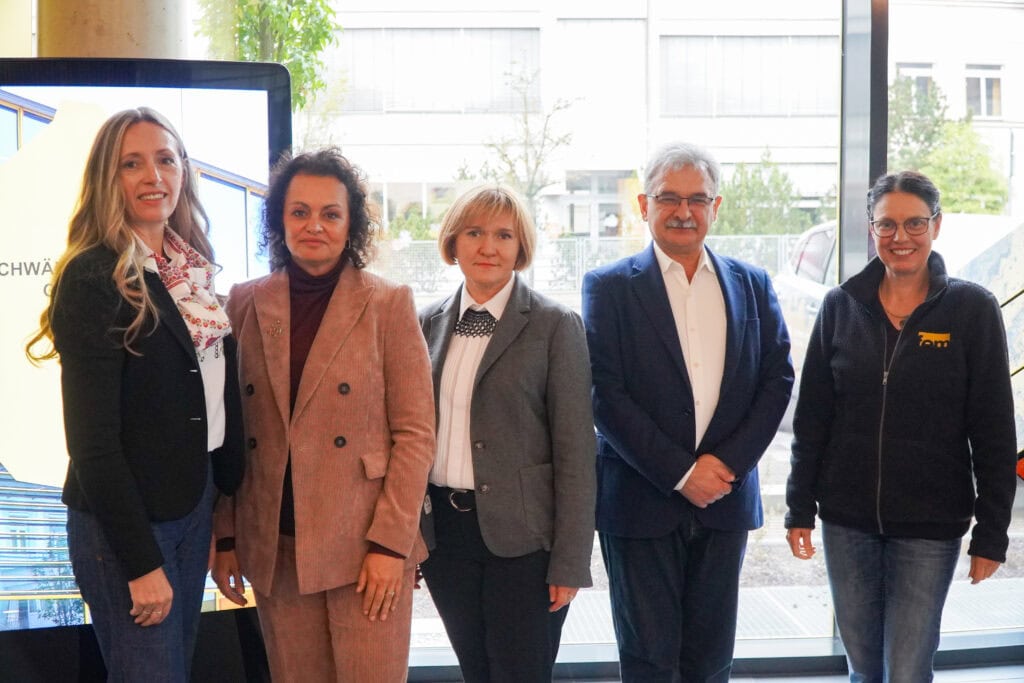
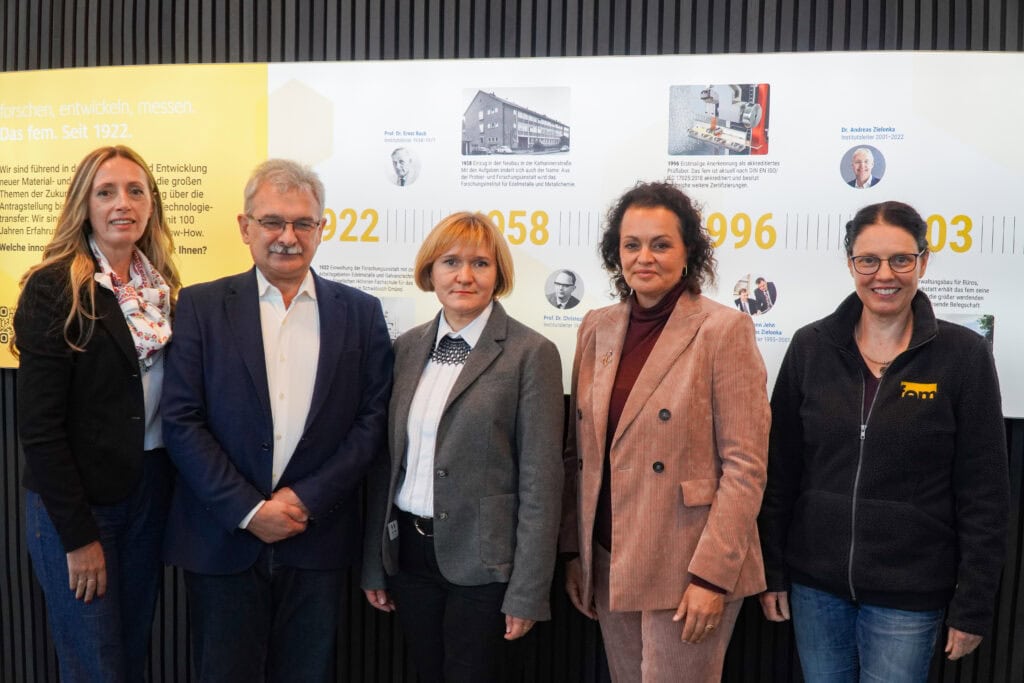
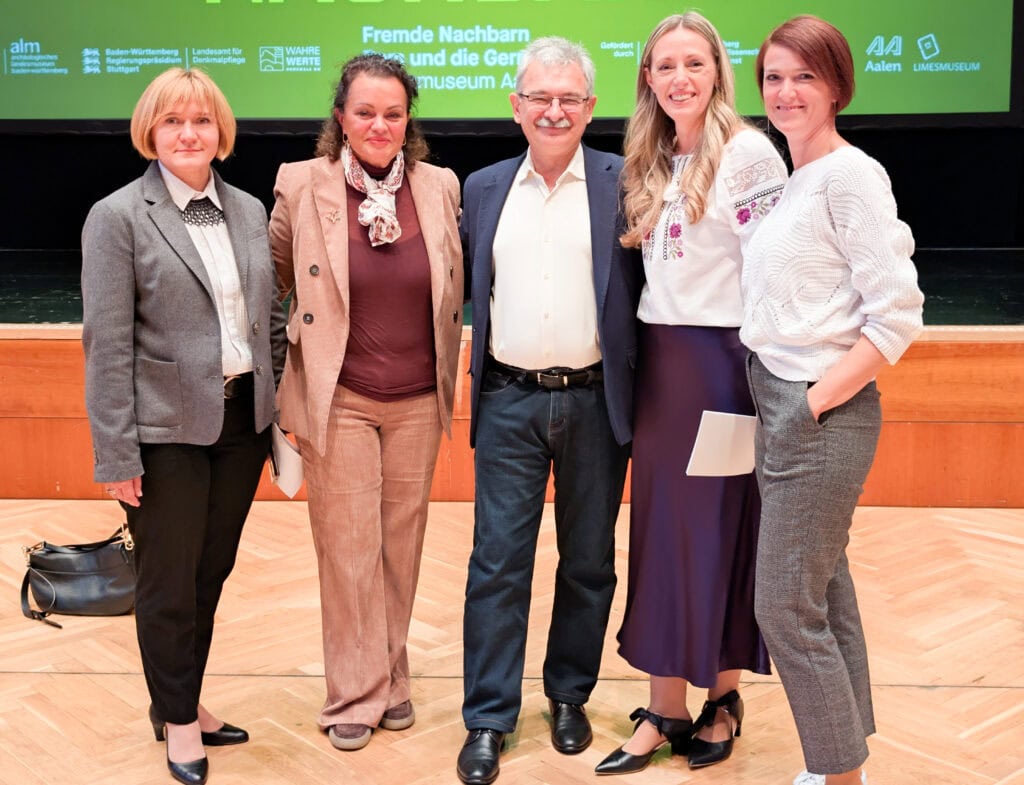
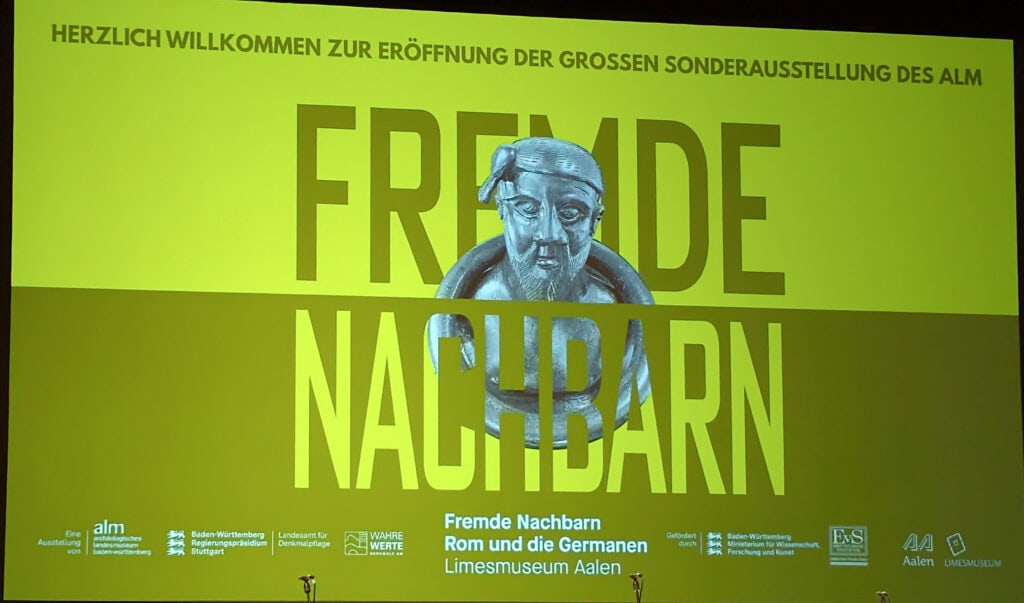
Die Eröffnung der großen Sonderausstellung „Fremde Nachbarn – Rom und die Germanen“ im Limesmuseum Aalen brachte internationale Gäste in die Region. Auf ihrem Weg durften wir am fem Forschungsinstitut die Archäologen Ihor Tymets und Nataliia Bilas vom Istoryko-Krayeznavchyy Muzey, Vynnyky (Ukraine) gemeinsam mit Nicole Ebinger begrüßen.
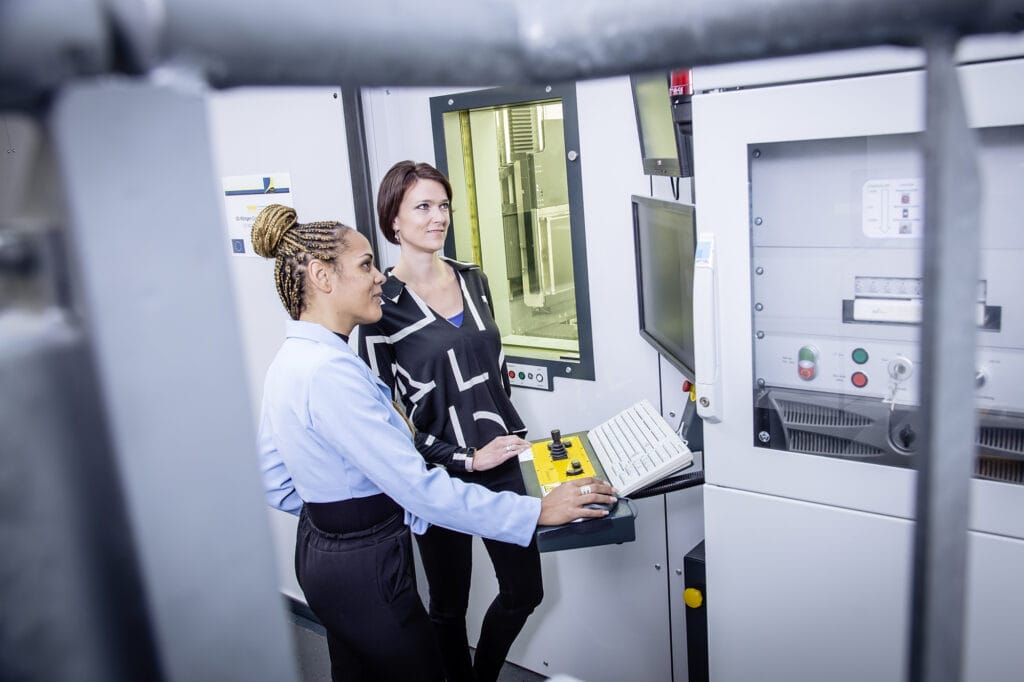
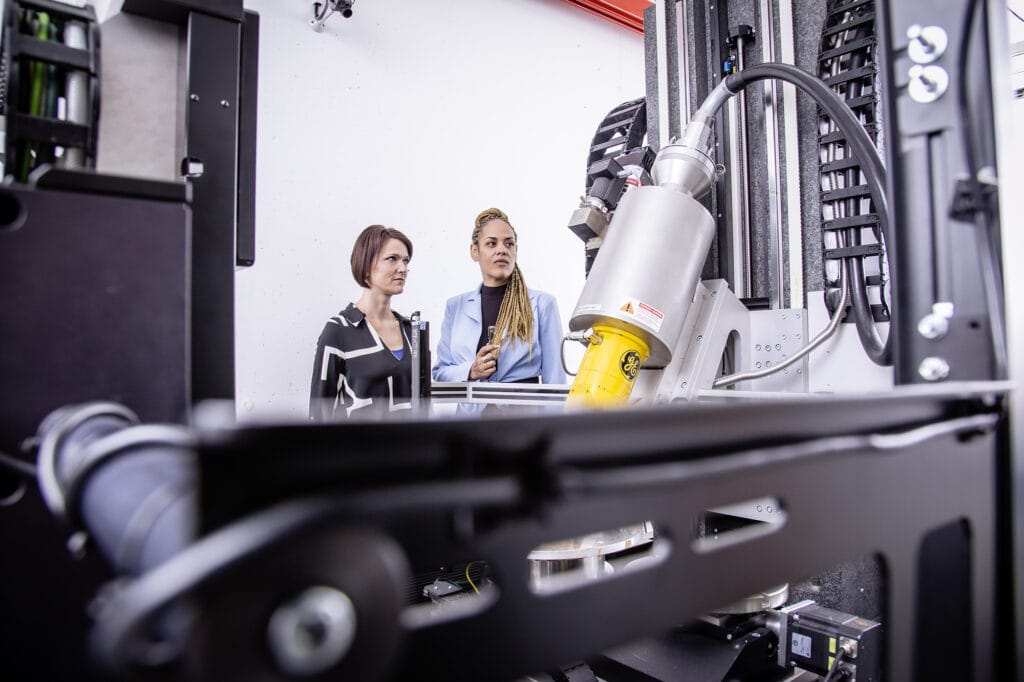
Bei einer kurzen Führung durch unsere Labore zeigten Katja Baumgärtner und Alexander Pfund, wie vielseitig unsere Arbeit ist, und boten spannende Einblicke in die Schnittstelle von Materialforschung, Industrie und Archäologie.
Modernste Technologie eröffnet neue Zugänge zur Vergangenheit.
Seit rund 15 Jahren arbeiten wir eng mit dem Landesamt für Denkmalpflege Baden-Württemberg im Regierungspräsidium Stuttgart zusammen. Unser 3D-Röntgen-Computertomograph (CT) ermöglicht eine zerstörungsfreie und hochauflösende Untersuchung komplexer Objekte aus allen Werkstoffklassen.
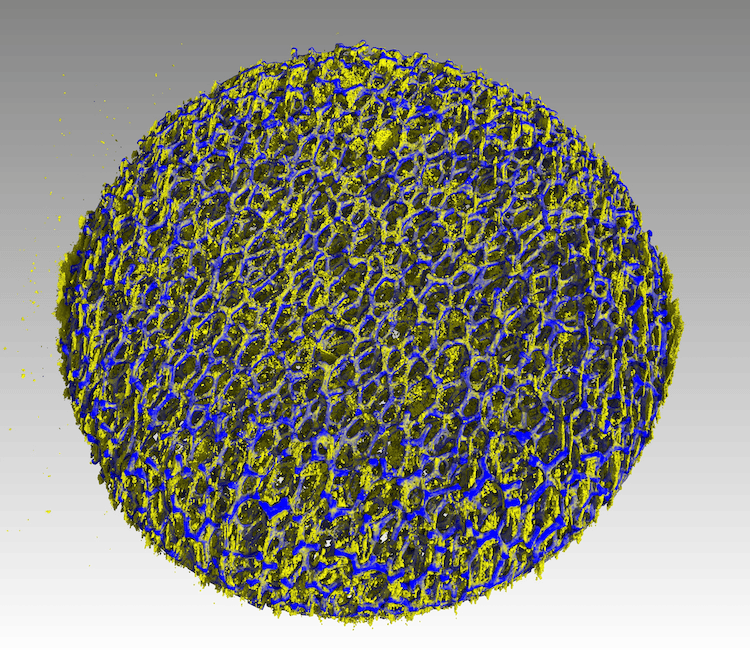
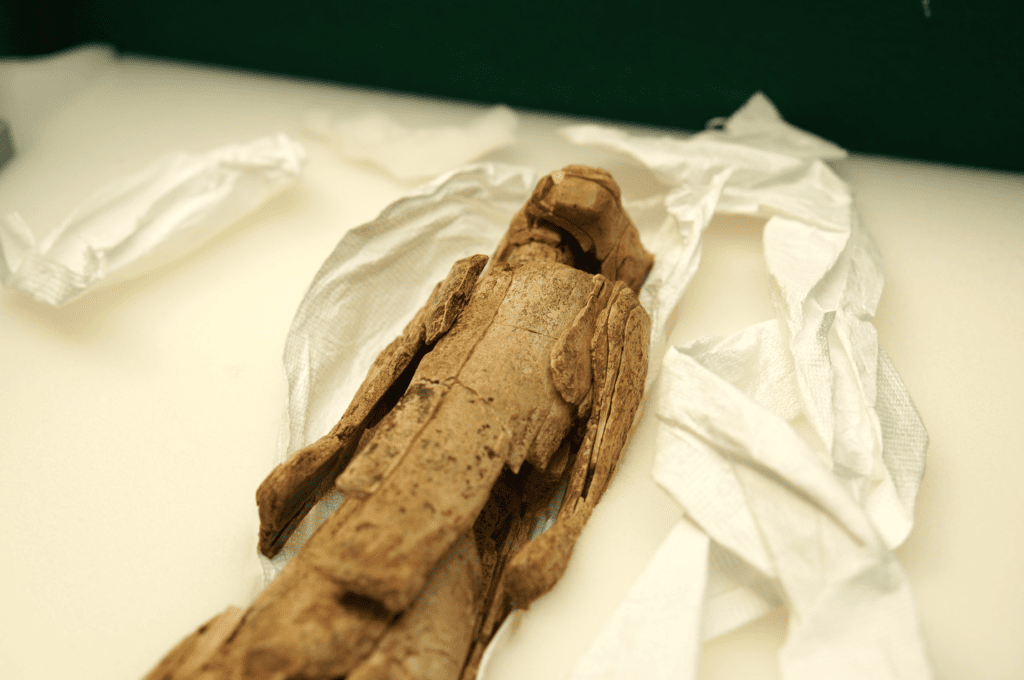
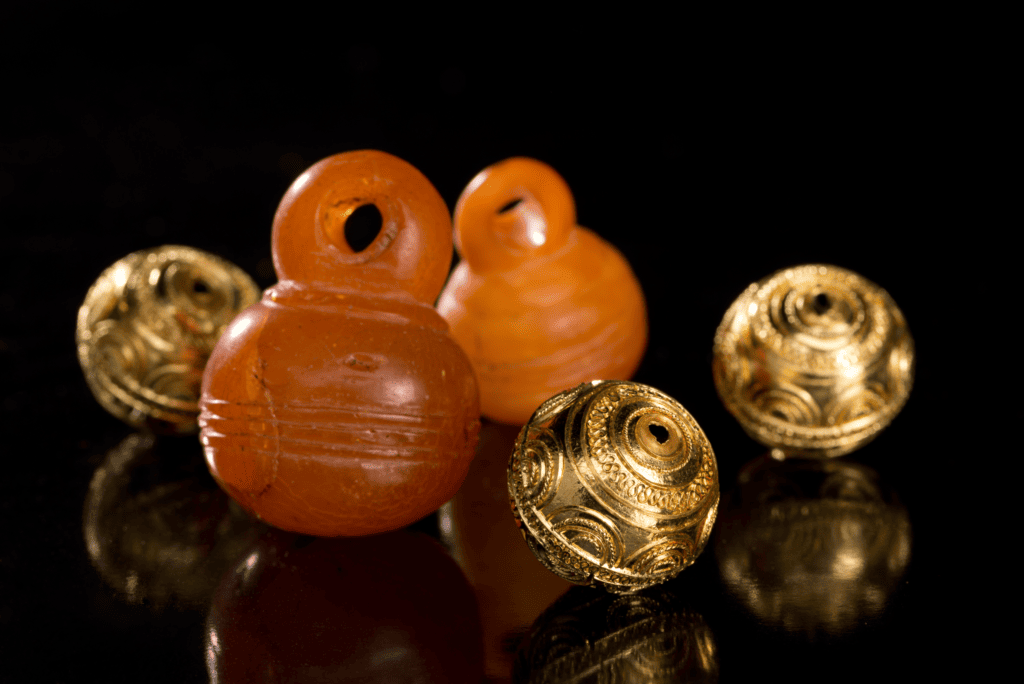
In der Archäologie ist das ein echter Mehrwert: Wertvolle Artefakte können hochauflösend visualisiert werden, ohne sie manuell freizulegen. So geschehen etwa beim frühkeltischen Fürstinnengrab von der Heuneburg oder beim weltberühmten Löwenmenschen von der Schwäbischen Alb. Ein nächstes Highlight steht bereits fest: Am Ende des Ausstellungszeitraums wird der römische Bronzekessel (Fundort: Ukraine, 2. Jahrhundert n. Chr.) zur Untersuchung an das fem kommen.
📅 Die Ausstellung in Aalen läuft noch bis 12. April 2026 und erzählt anschaulich, wie Römer und Germanen über Jahrhunderte nebeneinander lebten, voneinander lernten und zeigt auch, welche Lehren wir daraus für unser heutiges Miteinander ziehen können.
Zerstörungsfreie Analyse von Batterien und Brennstoffzellen
With computed tomography, the fem provides customers from industry and research with a method that enables the non-destructive, three-dimensional capture and characterisation of objects of any complexity from all material classes - alloys, ceramics, plastics and composites, biocompatible materials as well as construction materials and textiles - with all geometric and material-related structures.
APPLICATION EXAMPLE: ELECTROCHEMICAL ENERGY SYSTEMS
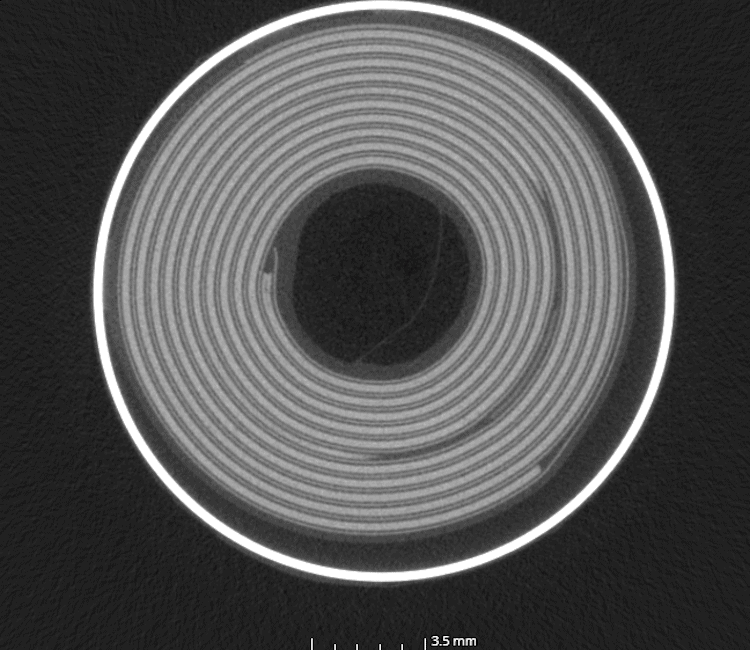
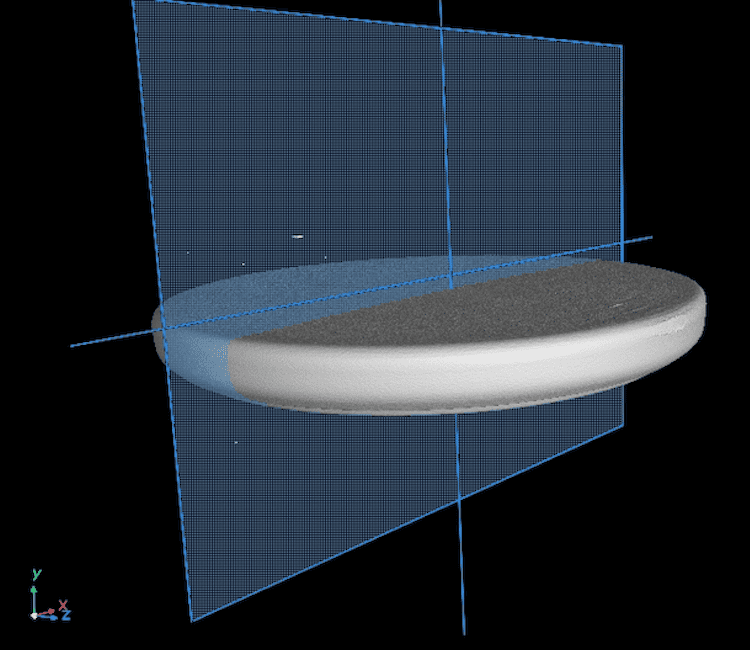
Analysis of batteries (all cell formats, e.g. button cells, pouch cells, prismatic cells): Structure, contacting, deformations, impurities and causes of damage.
Characterisation of fuel cells: Geometry and distance measurements, material and failure analysis
Characterisation of components for batteries, fuel cells and electrolysis (e.g. electrodes, bipolar plates, gas diffusion layers)
Since 2010, we have been analysing a wide variety of objects, components and materials in our CT laboratory and dealing with a wide range of issues - quickly, precisely and reliably. Thanks to our extensive experience and our outstanding technology, we can provide you not only with measurement results, but also with real solutions to problems.
INDUSTRIAL APPLICATION
Non-destructive testing
Damage Analysis
Component testing, assembly inspection
Quality management
Metrology
Dimensional control, target/actual comparison
Shape detection, 3D wall thickness analysis
Reverse Engineering
SCIENTIFIC APPLICATION
Characterisation of different material classes
Density or particle distribution
Parameter optimisation using simulations
Changes of state
Computer-aided product development
TECHNISCHE DATEN
PHOENIX V|TOME|X L 450 (MICRO-CT)
PHOENIX NANOTOM M 180 (NANO-CT)
RÖNTGENRÖHRE / SPANNUNG
300 kV
180 kV
RÖNTGENRÖHRE / LEISTUNG
MAX. 500 W
MAX. 15 W
FLÄCHENDETEKTOR / AUFLÖSUNG
4 MEGAPIXEL
5 MEGAPIXEL
FLÄCHENDETEKTOR / GRAUSTUFENAUFLÖSUNG
16 BIT
14 BIT
FLÄCHENDETEKTOR / MESSBEREICHSERWEITERUNG
3-FACH
1,5-FACH
VOXELAUFLÖSUNG
< 2,0 µm
< 0,5 µm
MAXIMALE BAUTEILGRÖSSE / DURCHMESSER
800 mm
240 mm
MAXIMALE BAUTEILGRÖSSE / HÖHE
1000 mm
250 mm
MAXIMALE BAUTEILGRÖSSE / GEWICHT
100 kg
3 kg
MESSZEIT
je nach Größe und Material
je nach Größe und Material
3D X-ray computed tomography CT for industrial, energy technology and archaeological applications
With computed tomography, the fem provides customers from industry and research with a method that enables the non-destructive, three-dimensional capture and characterisation of objects of any complexity from all material classes - alloys, ceramics, plastics and composites, biocompatible materials as well as construction materials and textiles - with all geometric and material-related structures.
Das Dienstleistungsangebot des fem richtet sich an alle Bereiche der metallverarbeitenden Industrie, z.B. Automobil- und Elektronikindustrie, Medizin-, Kunststoff – und Energietechnik, Luft- und Raumfahrt sowie Schmuck- und Uhrenindustrie. Das fem verfügt über das phoenix v|tome|x L 450 für folgende industrielle und wissenschaftliche Anwendungen:
INDUSTRIAL APPLICATION
Non-destructive testing
Damage Analysis
Component testing, assembly inspection
Quality management
Metrology
Dimensional control, target/actual comparison
Shape detection, 3D wall thickness analysis
Reverse Engineering
SCIENTIFIC APPLICATION
Characterisation of different material classes
Density or particle distribution
Parameter optimisation using simulations
Changes of state
Computer-aided product development
Since 2010, we have been analysing a wide variety of objects, components and materials in our CT laboratory and dealing with a wide range of issues - quickly, precisely and reliably. Thanks to our extensive experience and our outstanding technology, we can provide you not only with measurement results, but also with real solutions to problems.
APPLICATION EXAMPLE: ELECTROCHEMICAL ENERGY SYSTEMS
Analysis of batteries (all cell formats, e.g. button cells, pouch cells, prismatic cells): Structure, contacting, deformations, impurities and causes of damage.
Characterisation of fuel cells: Geometry and distance measurements, material and failure analysis
Characterisation of components for batteries, fuel cells and electrolysis (e.g. electrodes, bipolar plates, gas diffusion layers)
APPLICATION EXAMPLE: ELECTROCHEMICAL ENERGY SYSTEMS
Non-destructive detection and characterisation of arbitrarily complex objects from all material classes with all geometric and material-related structures
Precise 3D representation of exposed objects or objects recovered in the block
High-resolution visualisations of objects without prior manual exposure
Highlights: Examination of the Early Celtic, splendidly furnished princess tomb from the Heuneburg and the approx. 40,000-year-old lion man from the Swabian Alb.